
The short answer
Good wedding lighting is not one colour or one equipment package. It is a plan for the architecture, the people, the important moments and the dance floor, with intensity and direction changing as the evening develops.
Lighting is often discussed through fixtures: uplights, moving heads, string lights and spotlights. Couples make better decisions when they begin with function. What should the room feel like during dinner? Which surfaces deserve attention? How should the first dance be framed? What must change when the party begins?
What lighting genuinely adds to a reception
It creates visual hierarchy. It can make a large room feel warmer, reveal architectural texture, separate the dance floor from dining areas and keep the couple visible at the exact moments that matter. It also helps photographs remain coherent across different areas of the venue.
The three layers of a complete lighting plan
Each layer has a different responsibility. Treating them separately prevents the common mistake of using dance-floor fixtures to solve every visual problem.
Atmospheric lighting
Creates warmth and visual comfort around tables, lounges and circulation areas.
Architectural lighting
Reveals walls, columns, trees, façades and selected venue details.
Dynamic dance-floor lighting
Adds movement and contrast when the music and the audience are ready for it.
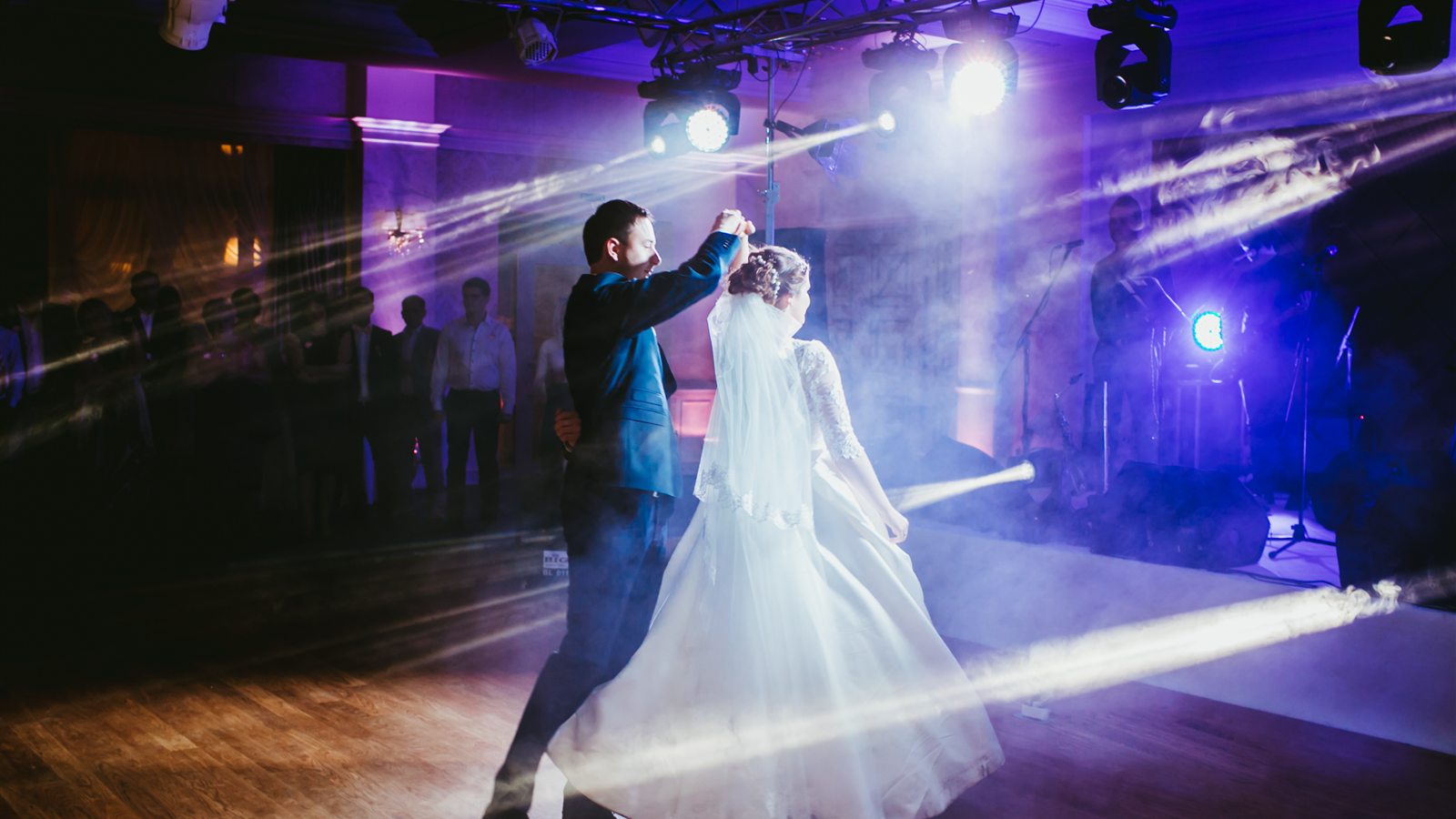
A static wash may support the venue, but the first dance, dinner and full party need different levels of focus, movement and contrast.
Design around the flow of the evening
The lighting plan should follow the run of show rather than remaining at one setting from guest arrival until closing.
- Guest arrival: comfortable faces, safe circulation and a clear first impression.
- Dinner: warm visual depth without beams crossing tables or cameras.
- Entrance and first dance: focused attention and exact coordination with the music cue.
- Opening the floor: a visible change of energy that invites participation.
- Full party: movement, contrast and intensity shaped around the music.
- Closing: a deliberate final look or a smooth return to ambient light.
Main lighting options and when they make sense
Perimeter and architectural uplighting
Useful when walls, stone, columns or landscaping need depth. Fixture placement, beam angle and colour consistency matter more than simply adding more units.
Fairy lights and string lights
They create an intimate canopy, scale and warmth indoors or outdoors, but require secure rigging, weather planning and enough installation time.
Dance-floor fixtures and moving heads
They support the musical build with movement and direction. Their position should protect dining tables, photographers and guests from constant glare.
Focused table and detail lighting
Pin spots can draw attention to the cake, flowers or selected tables without raising the brightness of the entire room.
Illuminated letters and monogram projection
These work when they belong to the visual identity and have a clear location, scale and viewing angle.
How lighting affects photography and video
Cameras need enough quality of light to preserve skin tones and detail. Strong colour directly on faces, extreme contrast and rapidly moving beams can limit what photographers and videographers can capture.
| Area | Priority | Common risk |
|---|---|---|
| Welcome and tables | Comfortable, warm and even light | Faces hidden in darkness. |
| First dance | Focused light with controlled background | Harsh colour or glare. |
| Dance floor | Movement with usable front light | Every frame dominated by beams. |
| Outdoor paths | Safe and visually connected circulation | Dark gaps between zones. |
Indoor and outdoor venues: what changes
Indoor spaces offer controlled rigging and power but may have low ceilings, reflective surfaces or restrictive house lighting. Outdoors require weather-rated equipment, protected power, secure supports and a realistic wind and rain plan.
Venue audit: six points to confirm
- 01Power
Available circuits, load limits and safe cable routes.
- 02Rigging
Permitted support points and restrictions on walls, trees or ceilings.
- 03Existing light
Which fixtures can be controlled, dimmed or switched off.
- 04Zones
Ceremony, dinner, dance floor and circulation may need separate treatment.
- 05Weather
Wind, humidity and rain protection for all outdoor elements.
- 06Schedule
Access, installation, testing and teardown windows.
Eight common wedding-lighting mistakes
- Choosing fixtures before defining the atmosphere.
- Using the same intensity all evening.
- Sending strong colour directly onto faces.
- Placing moving lights where they disturb tables.
- Ignoring existing venue lighting.
- Planning outdoors without weather protection.
- Forgetting cable safety and guest circulation.
- Leaving photography, music and lighting cues uncoordinated.
What shapes the cost?
Price depends on the venue size, number of zones, equipment type and quantity, rigging, installation time, technical crew, operating hours, transport and weather requirements. A responsible proposal describes what each element does and who installs and operates it.
Frequently asked questions
What to clarify before requesting a proposal
Does every wedding need architectural lighting?+
No. It is useful when the venue needs depth or specific surfaces deserve emphasis.
Can we use one colour all evening?+
You can keep one visual palette, but intensity, focus and movement should change with the programme.
Is outdoor lighting safe in bad weather?+
Only with suitable equipment, protected connections, secure rigging and a clear weather plan.
Should the DJ and lighting team coordinate?+
Yes. Entrances, first dance, opening the floor and major energy changes work best with shared cues.